“Nancy Bilyeau’s passion for history infuses her books.”
–bestselling historian and novelist Alison Weir
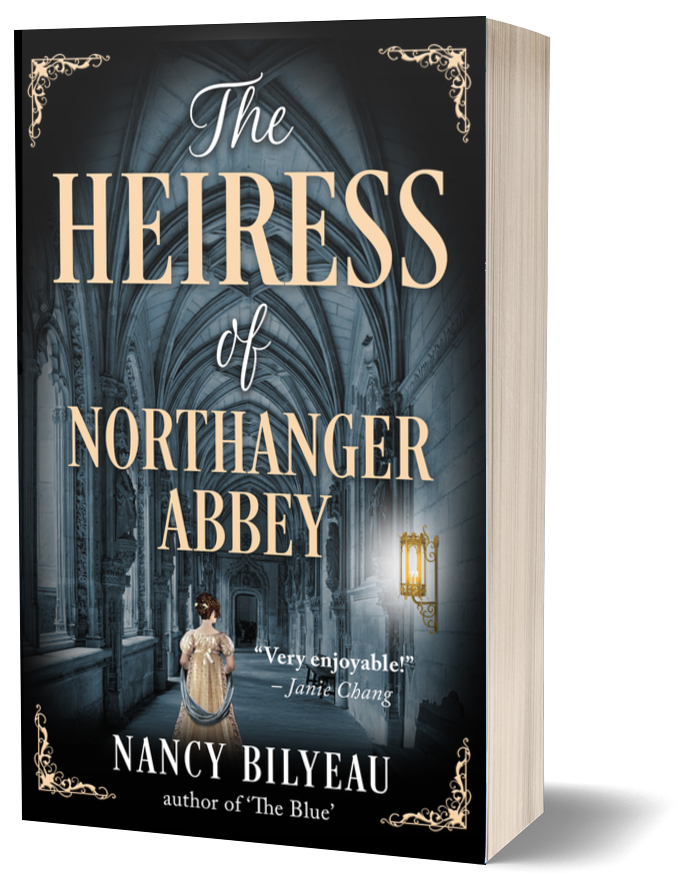
On Sale Now!
Nancy Bilyeau’s next book is the Gothic mystery and Regency adventure The Heiress of Northanger Abbey, a sequel to Jane Austen’s Northanger Abbey. Twenty-two years after her marriage to Henry Tilney, Catherine Tilney must face her darkest fears when her daughter, Phoebe, falls under the spell of the scheming Thorpe family. To rescue her child from fortune hunters, Catherine follows her to an isolated manor on Dartmoor. Amidst reckless passions and dark family secrets, she encounters a dangerous, charming aristocratic neighbor. Eerily mirroring the plot of the popular Gothic sensation The Vampyre, Catherine must determine if she is letting her imagination run wild or if the stakes are truly life and death.
About Nancy
Born in Chicago and a graduate of the University of Michigan, Nancy moved to New York City to work in the magazine business as a writer and editor. After working for publications ranging from Rolling Stone to Good Housekeeping, she turned to fiction. She wrote the Joanna Stafford trilogy, a trio of thrillers set in Henry VIII’s England, for Touchstone/Simon & Schuster. For her Genevieve Planché novels—The Blue, The Fugitive Colours, and The Versailles Formula—she drew on her heritage to create a Huguenot heroine. Nancy is a direct descendant of Pierre Billiou, a French Huguenot who immigrated to what was then New Amsterdam (later New York City) in 1661. Nancy’s ancestor, Isaac, was born on the boat crossing the Atlantic. Pierre’s stone house is the third oldest house in New York State.

Praise for Nancy Bilyeau’s Books:
The Orchid Hour:
“Bilyeau brilliantly evokes the intoxicating grit and glamour of Jazz Age Manhattan and layers a smooth blend of suspense and romance on top. Historical mystery fans will find this irresistible.”
—Publishers Weekly, starred review
On the Town & Country List of “41 Must-Read Books of Summer 2023”
“Nancy Bilyeau has created a beautifully layered and utterly seductive tale… and, at its living, tender heart, a strong-willed and magnetic heroine.”
—Emilya Naymark, author of Behind the Lie, finalist for the 2023 Sue Grafton Award
The Crown:
“Bilyeau deftly weaves extensive historical research throughout, but the real draw of this suspenseful novel is its juicy blend of lust, murder, conspiracy, and betrayal.”
—O, The Oprah Magazine, pick of the month
“In Joanna Stafford, Bilyeau has given us a memorable character who is prepared to risk her life to save what she most values.”
—Deborah Harkness, author of Discovery of Witches
The Blue:
“Definitely a winner!”
—Kate Quinn, author of The Alice Network
“Transports the reader into the heart of the 18th century porcelain trade—where the price of beauty was death”
—E.M. Powell, author of the Stanton & Barling medieval mystery series
Dreamland:
“I could practically taste the salt-water taffy and smell the ocean air as I read Bilyeau’s latest, set in 1911 Coney Island. Beautifully written and impeccably researched, Dreamland is a rollicking ride.”
—Fiona Davis, author of The Dollhouse and The Chelsea Girls
For the latest on Nancy’s book series, her nonfiction articles on history, her book reviews, giveaways, contests and more, sign up for her newsletter here:
Check your promotions or spam folder if you don’t receive the confirmation email. Problems signing up? Email Nancy.